


Selling a home in Banff?
You’ll need an up-to-date Home Report available to potential buyers when you put your property on the market.
We provide Home Reports across Aberdeenshire from our local Fraserburgh office, with clear reporting and practical guidance throughout the process.
Quick Answers about selling a home in Banff
Do I need a Home Report to sell in Banff?
Most homes sold in Scotland require a Home Report, with some exceptions (e.g., private sales not listed on the market). The seller or their agent must provide it.
How old can the Home Report be?
When a property is put on the market, the Home Report must be no more than 3 months old.
What’s included?
A Home Report has three parts:
Single Survey
Energy Report
Property Questionnaire
Get in touch for a quote now
Local Market Snapshot
As of January 2025, property in Banff stood an average value of £156,621. Though different property types have had different sold prices in the last 12 months. Detached properties for instance sold for an average of £225,779; semi-detached for £126,698; terraced for £117,792; and flats for £66,078.
Fraserburgh Office Details
Shepherd Chartered Surveyors — Fraserburgh
54 Broad Street, Fraserburgh AB43 9AH
Opening Hours
Monday – Thursday: 8.45am to 5.30pm
Friday: 8.45am to 5pm
Why local knowledge matters
Banff is an idyllic town and former Royal Burgh in Aberdeenshire of roughly 4,100 residents. It is situated on Banff Bay and faces the town of Macduff across the estuary of the River Deveron, with an attractive seven-arch bridge acting as a crossing over the river between the towns.
Historically, Banff was dependent on fishing but was also a centre for local trades like weaving, soapmaking, as well as having some of the most talented silver makers in Scotland. Today, Banff’s local economy is primarily based on leisure and tourism and the former commercial port has been transformed into a marina.
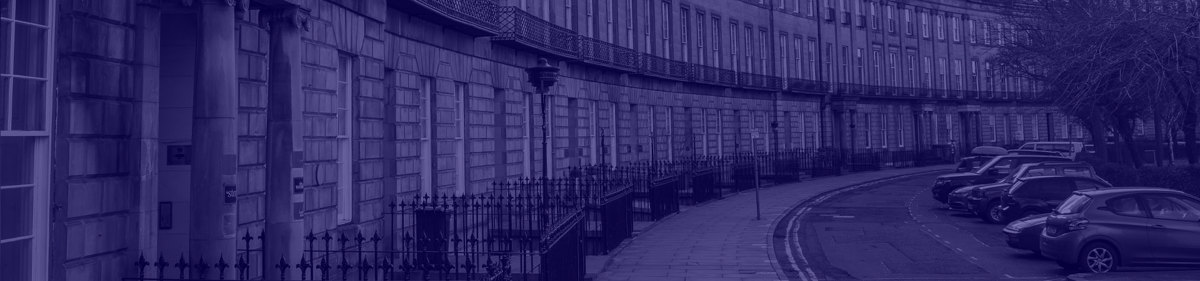
Banff today is also known for its rich history, with the remains of the former Royal Banff Castle in the town, as well some of the finest examples of Georgian architecture in Scotland which has attracted visitors to the town for hundreds of years, even to present day. It is one of the best persevered ‘oldie’ townscapes in Scotland and has been likened to a mini-Edinburgh. Duff House is widely agreed to be one of Scotland’s finest classical houses designed in 1740 as a seat for the Earls of Fife. It is a Georgian stately home with a range of art and treasures, luxuriously finished rooms, and extensive well-manicured grounds. It attracts thousands of visitors annually. Wrack Woods, just south of Duff House, offer fantastic routes for walkers and ramblers and is a well-known area to spot red squirrels.
Other popular attractions include the pre-reformation medieval market cross, representing the official site of the old town market, and Banff Museum, donated by the wealthy Scottish businessman and philanthropist, Andrew Carnegie.
In terms of other local amenities and things to do, Banff has the usual array of shops, supermarkets, local businesses, hotels, pubs, etc. However, the town setting offers some other fantastic opportunities like fishing in the River Deveron, which has been noted to have salmon and trout. Indeed, the setting of Banff is one of the best things about it, with sandy beaches and nearby woods for residents to freely explore, literally on their doorsteps.
For the golfer, Banff is a great centre from which to play on the numerous nearby courses. In the immediate vicinity of the town there are two courses: Duff House Royal Golf Club – which is practically in the town – and the Royal Tarlair Golf Club in Macduff but still within easy reach. The Myrus Golf Centre is a nearby driving range close to the town again on the Macduff side of the river. There are roughly eight other courses within an hour’s drive or less of Banff, such as Huntly Golf Club, Turriff Golf Club, Cullen Links Golf Club, and Strathlene Golf Club to name some of them.
As for local schooling, Banff Primary School and Banff Academy cover the town, with children from Macduff Primary School also feeding into Banff Academy.
What do you get in a Home Report?
Single Survey
A professional inspection that provides a snapshot of the property’s condition at the time of inspection, with clear condition ratings and notes.
Energy Report (includes EPC)
An overview of energy performance and emissions, plus recommended improvements. If you’re producing a Home Report, the EPC is included within it.
Property Questionnaire
Completed by the seller, covering practical information a buyer needs (for example, council tax band, utilities, parking, alterations and factoring arrangements where relevant).
How it works
Request a quote
Via online form
Book the inspection
Arranged at a suitable time for you
Survey completed
By a qualified RICS surveyor
Home Report issued
Ready to share with your prospective buyers
Shepherd tip: What affects the cost?
FAQs
Frequently asked questions about Residential Services
Most homes marketed for sale in Scotland need a Home Report, but there are exceptions (for example, certain private sales not put on the market).
Yes — if you’re producing a Home Report, the EPC is included as part of it.
Not necessarily. Access can often be arranged via your selling agent, keysafe, or other agreed method.
The report may recommend specialist checks for particular issues. If that happens, we’ll explain what it means and what people usually do next.
“”