


Selling a home in Cambuslang?
You’ll need an up-to-date Home Report available to potential buyers when you put your property on the market.
We provide Home Reports across Greater Glasgow from our local East Kilbride office, with clear reporting and practical guidance throughout the process.
Quick Answers about selling a home in Cambuslang
Do I need a Home Report to sell in Cambuslang?
Most homes sold in Scotland require a Home Report, with some exceptions (e.g., private sales not listed on the market). The seller or their agent must provide it.
How old can the Home Report be?
When a property is put on the market, the Home Report must be no more than 3 months old.
What’s included?
A Home Report has three parts:
Single Survey
Energy Report
Property Questionnaire
Get in touch for a quote now

Local Market Snapshot
Cambuslang has an array of residential property types. There are council-built homes in places but given the history of the area, there are some fantastic Scottish Victorian villas, as well as classic Scottish tenements in white and red sandstone, plus a host of more modern 3-, 4- and 5-bedroom homes with spacious gardens.
The average price for property in Cambuslang stood at £242,441 in January 2025. Though different property types in Cambuslang have had different average selling prices over the last 12 months: £293,654 for detached properties, £272,966 for semi-detached, £184,054 for terraced, and £117,227 for flats. However, this average hides quite a range, and it is not uncommon for larger properties to sell from £400,000 up to £500,000, and over for exceptional examples. Likewise, larger, modern family homes regularly sell anywhere between the £225,000 and £350,000 range, with some achieving even higher selling prices depending on the area, gardens, and finish or additions. Numerous new developments of modern homes are in progress by Miller Homes, Taylor Wimpey, and Persimmon.
East Kilbride Office Details
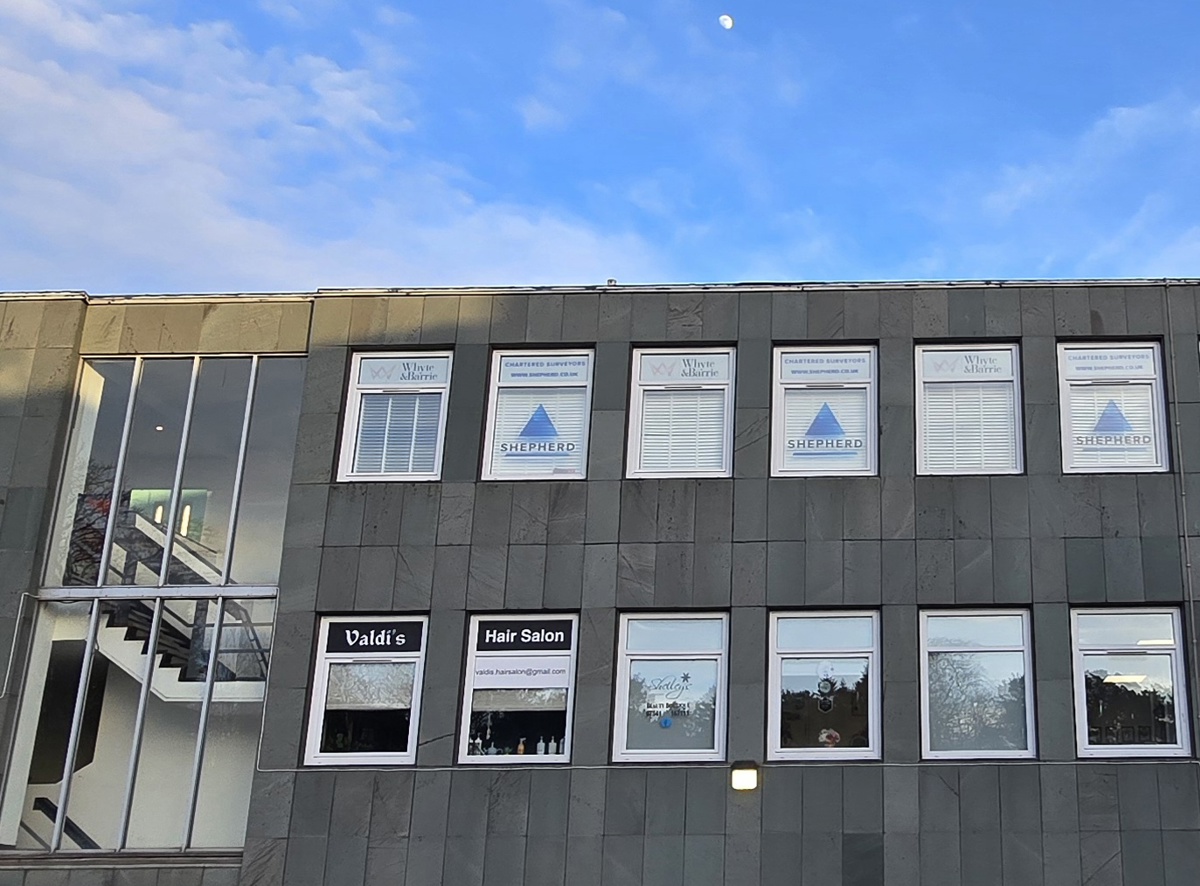
Shepherd Chartered Surveyors — East Kilbride
65-67 Strathmore House, The Plazza, East Kilbride Shopping Centre, East Kilbride, G74 1LF
Opening Hours
Monday – Thursday: 8.45am to 5.30pm
Friday: 8.45am to 5pm
Why local knowledge matters
The town of Cambuslang, just south of the River Clyde, sits roughly six miles to the south-east of Glasgow city centre and is home to some 30,000 residents. It is within the local authority area of South Lanarkshire and directly borders the town of Rutherglen to the west. The history of the town can be traced back to the 13th century, to the time of King Alexander II of Scotland. However, there were likely ancient settlements in the area as far back as the Iron Age with remains found at Dechmont Hill. It has been very prosperous over time, depending first upon its agricultural land – supplying food, then wool, then linen – then the mineral resources of limestone, coal and iron under its soil.
Indeed, the industrial wealth from the mining of these minerals is what led to the beginnings of Cambuslang as we know it today. The well-known Clyde Iron Works started as an offshoot of the Carron ironworks in 1786 and by the early 20th Century was the largest ironworks in Scotland. It was here, in 1828, that the hot blast technique was invented by James Beaumont Neilson. Then, the Clydebridge Steelworks started in 1887. It was linked with Clyde Iron Works just prior to WWII when it became the largest integrated steelworks in the country, producing steel plates for most of the famous ships on the Clyde. The extensive ironworks also attracted engineering and manufacturing during the 19th and 20th Centuries. The most prominent being Mitchell Engineering and Hoover (since shut down). With the decline of the industry, the Clyde Iron Works finally closed in 1978. Steelmaking stopped entirely at Clydebridge in 1978, but the heat treatment section of the works is still in operation today.
Nearby quarries included two at Wellshot and Eastfield produced sandstone and so this was used in much of the building of the area. With sandstone being quarried almost on the spot it’s easy to find examples of buildings of this type throughout the town, but none so elegant as the plentiful 19th century Victorian villas which still stand across the town today. Indeed, by the end of the 19th century, many wealthy Glasgow businessmen had built houses in Cambuslang due to its easy accessibility by rail from the city of Glasgow.
Nowadays, the town is mainly a commuter area for workers based in Glasgow city centre, but there are nearby industrial estates and distribution centres providing employment for residents. Cambuslang takes advantage of its proximity to the M74 and M8 motorway system and is also well served by a regular train service directly to Glasgow Central Station. The area is also well served by buses too, again into Glasgow city centre or further into South Lanarkshire and elsewhere.
In terms of amenities, Cambuslang has several attractions and things to do. One of the highlights in the town every June is its Summerfest, providing a range of street entertainment, an arts programme, children’s theatre and much more. Families also enjoy the nearby kids soft play areas and trampolining centres. Additionally, there is an indoor karting and paintballing centre, the largest in Scotland, as well as a busy main street with cafes, restaurants, pubs and other small local businesses. There is also Cambuslang park, which is popular with locals and dog walkers. The town also benefits from several nearby golf courses, the nine-hole Cambuslang Golf Club, the 18-hole Kirhill Golf Club, and while technically not in Cambuslang, the Cathkin Braes Golf Course is nearby and is a challenging 18-hole moorland course.
As for schooling, the town is served by nine nearby primary schools, Cairns Primary School, Hallside Primary School, James Aiton Primary School, Newton Farm Primary School, Park View Primary School, St Bride’s Primary School, St Cadoc’s Primary School, St Charles’ Primary School, West Coats Primary School (393), and three secondary schools, Cathkin High, Trinity High, and Rutherglen High. Some parts of Cambuslang fall under the catchment areas for Uddingston Grammar School, and Stonelaw High in Rutherglen.
What do you get in a Home Report?
Single Survey
A professional inspection that provides a snapshot of the property’s condition at the time of inspection, with clear condition ratings and notes.
Energy Report (includes EPC)
An overview of energy performance and emissions, plus recommended improvements. If you’re producing a Home Report, the EPC is included within it.
Property Questionnaire
Completed by the seller, covering practical information a buyer needs (for example, council tax band, utilities, parking, alterations and factoring arrangements where relevant).
How it works
Request a quote
Via online form
Book the inspection
Arranged at a suitable time for you
Survey completed
By a qualified RICS surveyor
Home Report issued
Ready to share with your prospective buyers
Shepherd tip: What affects the cost?
FAQs
Frequently asked questions about Residential Services
Most homes marketed for sale in Scotland need a Home Report, but there are exceptions (for example, certain private sales not put on the market).
Yes — if you’re producing a Home Report, the EPC is included as part of it.
Not necessarily. Access can often be arranged via your selling agent, keysafe, or other agreed method.
The report may recommend specialist checks for particular issues. If that happens, we’ll explain what it means and what people usually do next.
“”