


Selling a home in Dalbeattie?
You’ll need an up-to-date Home Report available to potential buyers when you put your property on the market.
We provide Home Reports across Kirkcudbrightshire from our local Dumfries office, with clear reporting and practical guidance throughout the process.
Quick Answers about selling a home in Dalbeattie
Do I need a Home Report to sell in Dalbeattie?
Most homes sold in Scotland require a Home Report, with some exceptions (e.g., private sales not listed on the market). The seller or their agent must provide it.
How old can the Home Report be?
When a property is put on the market, the Home Report must be no more than 3 months old.
What’s included?
A Home Report has three parts:
Single Survey
Energy Report
Property Questionnaire
Get in touch for a quote now

Local Market Snapshot
At January 2025, property in Dalbeattie stood at an average value of £160,194. Though different property types in Dalbettie have had different average selling prices over the last 12 months: £219,611 for detached properties, £145,688 for semi-detached, £127,198 for terraced and £72,500 for flats.
Dumfries Office Details
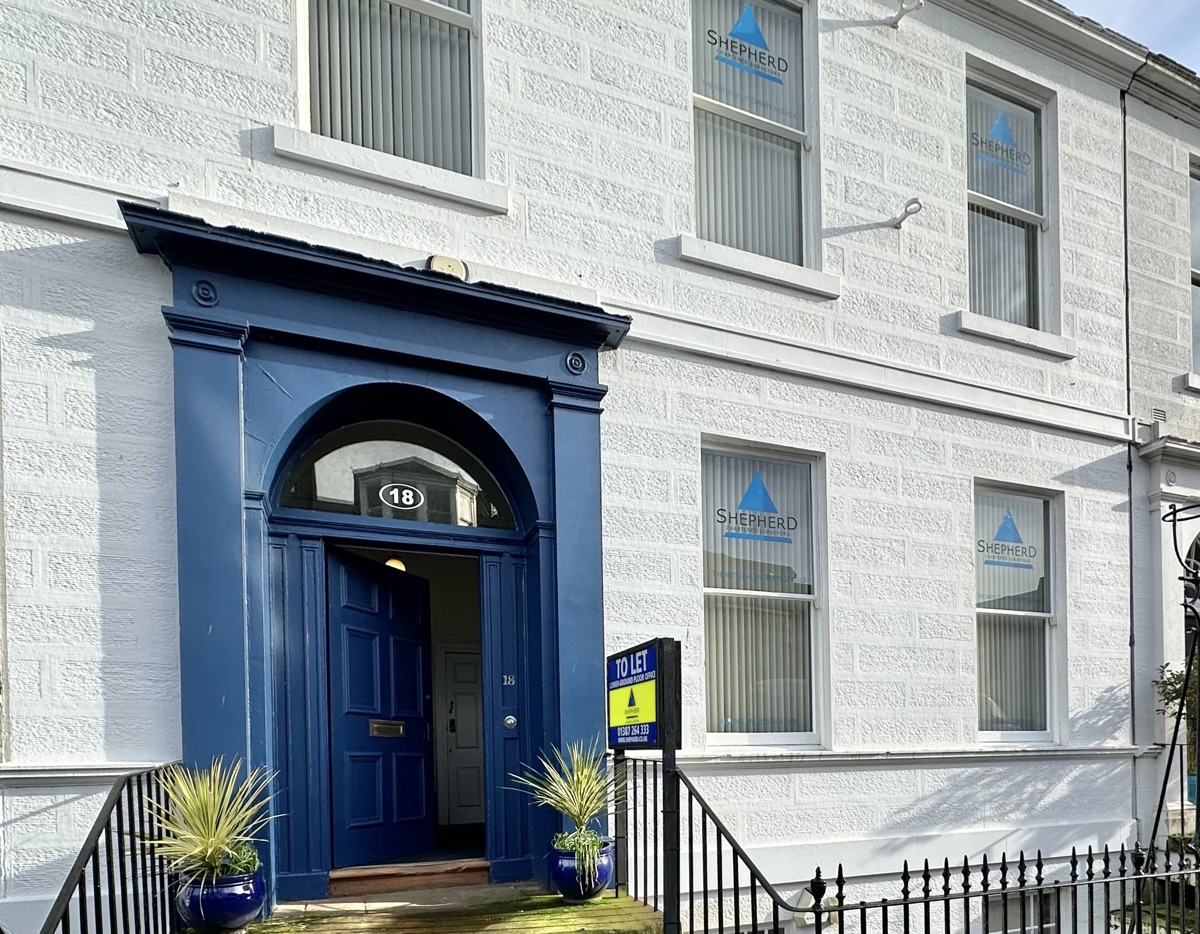
Shepherd Chartered Surveyors — Dumfries
18 Castle Street, Dumfries DG1 1DR
Opening Hours
Monday – Thursday: 8.45am to 5.30pm
Friday: 8.45am to 5pm
Why local knowledge matters
Dalbeattie is a town in the historical county of Kirkcudbrightshire in Dumfries and Galloway, Scotland. Dalbeattie is in a wooded valley on the Urr Water about 4 miles east of Castle Douglas and 12 miles southwest of Dumfries. The town is known as the granite town of southwest Scotland and for being the hometown of William McMaster Murdoch, the First Officer of the RMS Titanic.
The formal and planned beginnings of Dalbeattie originate in the 1780s when local landowners George Maxwell of Munches and Alexander Copeland of Kingsgrange (or Colliston) decided to encourage the development of the town. They did, and in 1797 the bridge over the Urr was built. The easier river crossing alongside the granite industry expansion encouraged more and more people come to settle in the town for work. By the 1810s there was abundant work in the grant quarries which was the driving force for the town and townspeople’s growing prosperity. As a result, many locals also began to found businesses like shops and services for the other residents. This is the beginning of Dalbeattie as we know it today.
Dalbeattie today has changed, like many Scottish towns, it doesn’t have the same focus on industry as it once did. A significant number of residents travel to Dumfries for work. The A711 road passes through the town and allows for travel northeast directly into Dumfries town centre. Residents can also drive west and join the A75 trunk road which also allows for travel to Dumfries and beyond, or further west to Newton Stewart and Stranraer. There are several regular bus routes serving the town and connecting it to Dumfries as well as the other local settlements in Dumfries and Galloway. The town has no railway station of its own in use today, the closest being in Dumfries, but the regular bus services somewhat make up for this.
In terms of amenities and things to do, Dalbeattie has a fair bit going on. The town has many independent shops and great places to eat out as well as the usual chain stores and supermarkets.
The town makes an ideal base for exploring the Colvend Coast and the region’s castles and gardens. Around Dalbeattie there’s an abundance of country walks and great opportunities for golfing, fishing and mountain biking, with the internationally renowned 7stanes Mountain Bike Trail in Dalbeattie Forest. The best place to start for walkers is the Dalbeattie Town Wood car park. Dalbeattie Forest’s mix of deciduous woodland and conifer forest creates a green link between the town and coast. Also worth a specific mention is Pretty Plantain Loch which is real gem in this quiet, easy to explore forest beside the town of Dalbeattie where ducks, birds and other wildlife can be enjoyed as well as soaring sculptures placed amongst the trees. It is also used by tourists regularly as its position is well situated for access to the Solway coast, which is an Area of Outstanding Natural Beauty in northern Cumbria.
As for local schooling then, Dalbeattie is served by Dalbeattie Primary School and Dalbeattie High School.
What do you get in a Home Report?
Single Survey
A professional inspection that provides a snapshot of the property’s condition at the time of inspection, with clear condition ratings and notes.
Energy Report (includes EPC)
An overview of energy performance and emissions, plus recommended improvements. If you’re producing a Home Report, the EPC is included within it.
Property Questionnaire
Completed by the seller, covering practical information a buyer needs (for example, council tax band, utilities, parking, alterations and factoring arrangements where relevant).
How it works
Request a quote
Via online form
Book the inspection
Arranged at a suitable time for you
Survey completed
By a qualified RICS surveyor
Home Report issued
Ready to share with your prospective buyers
Shepherd tip: What affects the cost?
FAQs
Frequently asked questions about Residential Services
Most homes marketed for sale in Scotland need a Home Report, but there are exceptions (for example, certain private sales not put on the market).
Yes — if you’re producing a Home Report, the EPC is included as part of it.
Not necessarily. Access can often be arranged via your selling agent, keysafe, or other agreed method.
The report may recommend specialist checks for particular issues. If that happens, we’ll explain what it means and what people usually do next.
“”