


Selling a home in Grangemouth?
You’ll need an up-to-date Home Report available to potential buyers when you put your property on the market.
We provide Home Reports across Falkirk from our local Falkirk office, with clear reporting and practical guidance throughout the process.
Quick Answers about selling a home in Grangemouth
Do I need a Home Report to sell in Grangemouth?
Most homes sold in Scotland require a Home Report, with some exceptions (e.g., private sales not listed on the market). The seller or their agent must provide it.
How old can the Home Report be?
When a property is put on the market, the Home Report must be no more than 3 months old.
What’s included?
A Home Report has three parts:
Single Survey
Energy Report
Property Questionnaire
Get in touch for a quote now

Local Market Snapshot
The average price for property in Grangemouth stood at £130,347 in January 2025. Though different property types have had different sold prices in the last 12 months. Detached properties for instance sold for an average of £251,036; semi-detached for £187,313; terraced for £130,220; and flats for £93,896.
Falkirk Office Details
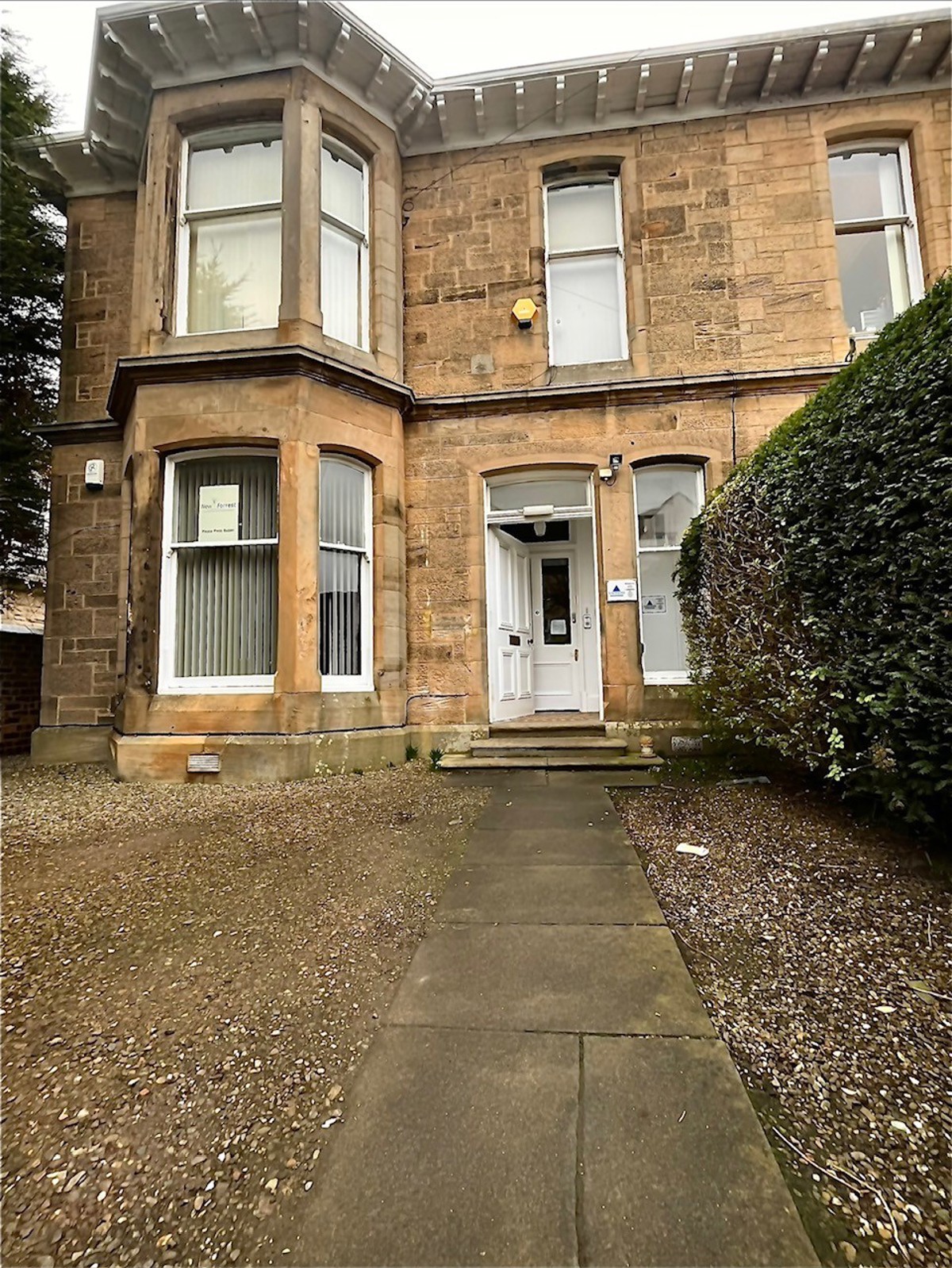
Shepherd Chartered Surveyors — Falkirk
23A Wellside Place, Falkirk FK1 5RL
Opening Hours
Monday – Thursday: 8.45am to 5.30pm
Friday: 8.45am to 5pm
Why local knowledge matters
The town of Grangemouth is home to roughly 17,000 residents and is located roughly 3 miles to the east of Falkirk. The town itself lies within the Forth Valley, on the banks of the Firth of Forth. In fact, the initial growth of the town in the 18th century relied upon its geographic location, when the town was predominantly a shipbuilding town and port, with trade and goods flowing through it after the construction of the Forth and Clyde canal.
Nowadays Grangemouth, while still having its port – the largest container terminal and busiest deep-water port in Scotland – is known for its large petrochemical plant, the Grangemouth Refinery, which is quite the sight at night being one of the largest of its kind in Europe. Indeed, it is one of the town’s most significant employers. The old Soap Works building, which was used to manufacture soap and glycerine, and owned by the Scottish Co-operative Wholesale Society was established in 1897, was demolished in 2005. This was the largest works of its kind in Scotland and employed a considerable number of local people. It was demolished to make way for a new Whyte and Mackay blending and bottling plant.
Naturally, transport links around the town are very good, with the M9 running past the town for connections to Stirling, Edinburgh and Glasgow. Grangemouth is also served by three nearby train stations, Falkirk High, Falkirk Grahamston, and Polmont. These all offer regular trains to Falkirk, Stirling, Glasgow Queen Street Station, Edinburgh Waverley and other major hubs farther still. The excellent transport links make it a popular commuter town like nearby Falkirk.
As for the town’s amenities, Grangemouth is well served by sports facilities generally, boasting a major sports complex, golf course and artificial ski slope, as well as the usual fitness facilities. There are also several nearby parks such as Zetland park which has crazy golf, putting, tennis courts, bouncy castle and more. Being so close to Falkirk, residents benefit from amenities and attractions there too, like the trampolining park, kids soft play centre, cinemas, Callendar House, Culross Palace, and not forgetting The Helix: Home of the Kelpies. Despite being one of the newest courses Grangemouth Golf Club is highly rated and has played host to numerous PGA events. There are several other golf courses within easy reach in and around the Falkirk area too. Plenty to do for all ages and interests.
In terms of local schooling, Grangemouth has four primary schools: Bowhouse Primary School, Beancross Primary School, Moray Primary School and Sacred Heart R.C. Primary School. The former three are within the catchment area of Grangemouth High School and the latter is a catchment primary school for St. Mungo’s High School. Grangemouth High School was recently rebuilt with new facilities such as an indoor swimming pool, dance studio, a gym, and an outdoor football pitch.
What do you get in a Home Report?
Single Survey
A professional inspection that provides a snapshot of the property’s condition at the time of inspection, with clear condition ratings and notes.
Energy Report (includes EPC)
An overview of energy performance and emissions, plus recommended improvements. If you’re producing a Home Report, the EPC is included within it.
Property Questionnaire
Completed by the seller, covering practical information a buyer needs (for example, council tax band, utilities, parking, alterations and factoring arrangements where relevant).
How it works
Request a quote
Via online form
Book the inspection
Arranged at a suitable time for you
Survey completed
By a qualified RICS surveyor
Home Report issued
Ready to share with your prospective buyers
Shepherd tip: What affects the cost?
FAQs
Frequently asked questions about Residential Services
Most homes marketed for sale in Scotland need a Home Report, but there are exceptions (for example, certain private sales not put on the market).
Yes — if you’re producing a Home Report, the EPC is included as part of it.
Not necessarily. Access can often be arranged via your selling agent, keysafe, or other agreed method.
The report may recommend specialist checks for particular issues. If that happens, we’ll explain what it means and what people usually do next.
“”