


Selling a home in Bannockburn?
You’ll need an up-to-date Home Report available to potential buyers when you put your property on the market.
We provide Home Reports across Stirling from our local Stirling office, with clear reporting and practical guidance throughout the process.
Quick Answers about selling a home in Bannockburn
Do I need a Home Report to sell in Bannockburn?
Most homes sold in Scotland require a Home Report, with some exceptions (e.g., private sales not listed on the market). The seller or their agent must provide it.
How old can the Home Report be?
When a property is put on the market, the Home Report must be no more than 3 months old.
What’s included?
A Home Report has three parts:
Single Survey
Energy Report
Property Questionnaire
Get in touch for a quote now

Local Market Snapshot
In January 2025, property in Bannockburn was at an average value of £157,378. Over the last 12 months, different property types have had different average prices. Detached properties for instance sold for £284,625, semi-detached for £159,196, terraced for £140,336, and flats for £111,288. Bannockburn, with its rich history, strong transport links, and proximity to Stirling, offers a unique blend of historical significance and modern convenience, making it an appealing place to live.
Stirling Office Details
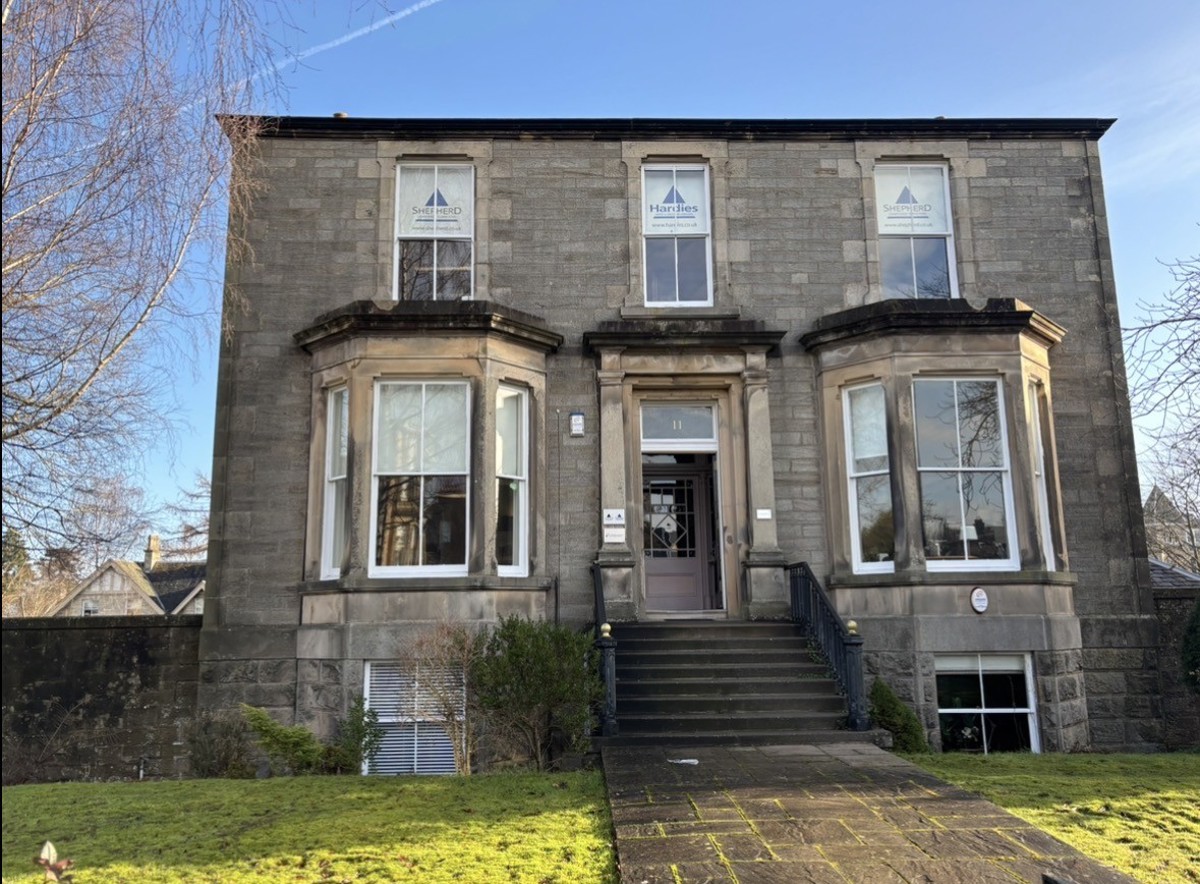
Shepherd Chartered Surveyors — Stirling
11 Gladstone Place, Stirling FK8 2NN
Opening Hours
Monday – Thursday: 8.45am to 5.30pm
Friday: 8.45am to 5pm
Why local knowledge matters
Bannockburn is a famously historical area of Scotland immediately south of the City of Stirling with some 6,900 residents. While once a distinct town it now adjoins Stirling, acting as a suburb of the city on its southern edge. Bannockburn is named for the Bannock Burn, a stream running through the town before flowing into the River Forth, however it is far more well known for the Battle of Bannockburn that took place in 1314 between the army of Robert the Bruce and English forces resulting in a landmark victory for Scotland. In more recent history in the 18th and 19th centuries it was a mining area with other manufacturing such as textiles, predominantly producing tartans.
Bannockburn today then is predominantly a commuter town for people working in nearby Stirling which most people can reach easily by car, bus, or walking. Falkirk too is just over 9 miles away, Glasgow about 15 miles away, and Edinburgh just 35 miles away. These distances to Scotland’s two largest cities alone make Bannockburn a desirable place to live. Building on that point, nearby transport links are very good for residents. The town is bisected by the A9 road which connects to the main A91 trunk road, that allows for speedy connections on to the M80 and M9 motorways, making travel to nearby areas as well as Glasgow and Edinburgh very easy. There are many local and frequent bus services connecting Bannockburn to Stirling and other nearby areas, and Stirling bus station provides inter-city coach services. The nearest railway station is Stirling train station that provides passengers with services to Inverness, Aberdeen and London’s King’s Cross. Residents are set to benefit further following the Office of Rail and Road (ORR) approval of an application by Grand Union Trains to operate four daily return services between London Euston and Stirling from June 2025.
While many do indeed commute elsewhere, many also work within the area and Stirling in the tourist sector with visitor centres and tours focused on the Scottish Wars of Independence, The Battle of Bannockburn, and Stirling Castle. The tourism element contributes significantly to the local economy with the many thousands of annual visitors.
As for amenities and things to do, Bannockburn has a few local services and shops on the doorstep of residents such as a pharmacy, newsagents, hair salons, takeaways, library and more of the usual businesses you would expect to see. There are also a few B&B’s as well as hotels just outside the area to the south. Though given its proximity to Stirling it largely relies on the larger city’s array of shops and supermarkets. In fairness, it almost never really had to develop any of its own given how close almost all residents are to Stirling. It does however have the Battle of Bannockburn visitor centre that attracts many thousands of people each year. The exact site of the Battle of Bannockburn has been debated for many years, but most modern historians agree that the traditional site, where the visitor centre and Robert the Bruce statue have been erected, is not actually correct.
In terms of local education, the local primary schools are Bannockburn Primary and St. Mary’s RC Primary. The local high schools are Bannockburn High School, while the nearest RC high school is St. Modan’s in Stirling.
What do you get in a Home Report?
Single Survey
A professional inspection that provides a snapshot of the property’s condition at the time of inspection, with clear condition ratings and notes.
Energy Report (includes EPC)
An overview of energy performance and emissions, plus recommended improvements. If you’re producing a Home Report, the EPC is included within it.
Property Questionnaire
Completed by the seller, covering practical information a buyer needs (for example, council tax band, utilities, parking, alterations and factoring arrangements where relevant).
How it works
Request a quote
Via online form
Book the inspection
Arranged at a suitable time for you
Survey completed
By a qualified RICS surveyor
Home Report issued
Ready to share with your prospective buyers
Shepherd tip: What affects the cost?
FAQs
Frequently asked questions about Residential Services
Most homes marketed for sale in Scotland need a Home Report, but there are exceptions (for example, certain private sales not put on the market).
Yes — if you’re producing a Home Report, the EPC is included as part of it.
Not necessarily. Access can often be arranged via your selling agent, keysafe, or other agreed method.
The report may recommend specialist checks for particular issues. If that happens, we’ll explain what it means and what people usually do next.
“”