


Selling a home in Portknockie?
You’ll need an up-to-date Home Report available to potential buyers when you put your property on the market.
We provide Home Reports across Moray from our local Elgin office, with clear reporting and practical guidance throughout the process.
Quick Answers about selling a home in Portknockie
Do I need a Home Report to sell in Portknockie?
Most homes sold in Scotland require a Home Report, with some exceptions (e.g., private sales not listed on the market). The seller or their agent must provide it.
How old can the Home Report be?
When a property is put on the market, the Home Report must be no more than 3 months old.
What’s included?
A Home Report has three parts:
Single Survey
Energy Report
Property Questionnaire
Get in touch for a quote now

Local Market Snapshot
In September 2025, property in the Portknockie area has an average value of £190,938. Housing in Portknockie is a pleasing mix. Closest to the harbour and older core you’ll find traditional 1–1½-storey fisher cottages, many stone-built and harled, often with dormers and neat forecourts; a number are listed for their architectural value, particularly along Seafield Street and Admiralty/Pulteney Streets. Fringing the centre are inter-war and post-war terraces and bungalows, plus later infill and small cul-de-sacs from the late 20th century onward.
Elgin Office Details
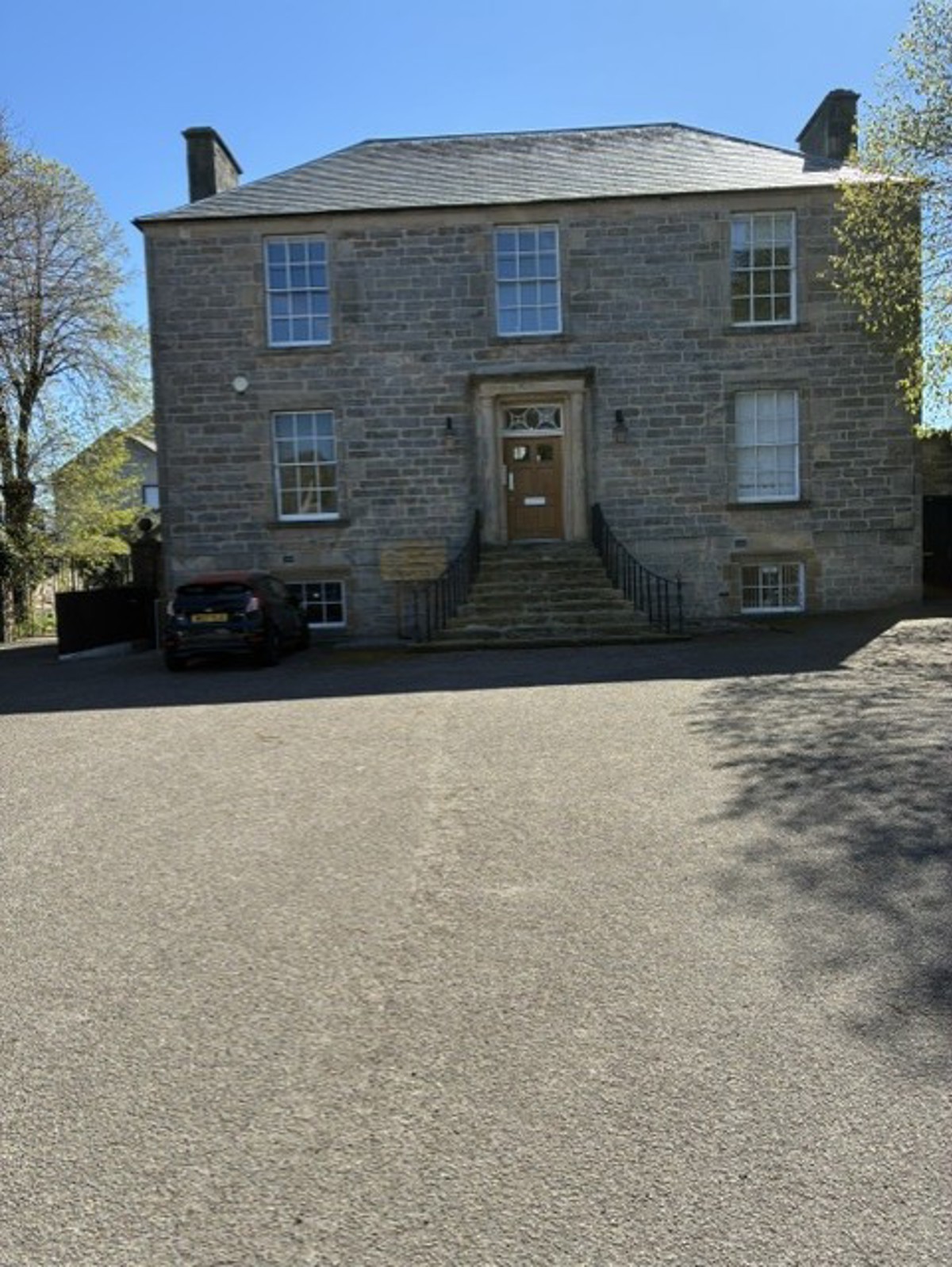
Shepherd Chartered Surveyors — Elgin
Park House Business Centre, South Street, Elgin, Moray IV30 1JB
Opening Hours
Monday – Friday: 9:00am to 5:00pm
Why local knowledge matters
Perched high on cliffs above the Moray Firth, Portknockie is one of Moray’s classic fishing villages, famed for the natural sea-arch of Bow Fiddle Rock and for wide-open views that change with the light and tide. The settlement remains compact and walkable, centred on streets that tumble gently towards a working harbour. With a population of around 1,230, Portknockie feels intimate and close-knit without being remote. The village lies on the A942 between Findochty and Cullen on Moray’s north coast. It is roughly 2 miles west of Cullen and about 2 miles east of Findochty, making both villages easy, five-minute hops by bus or car. Elgin, the area’s principal town for major shopping, healthcare and rail links, is around 17 miles southwest by road. For wider travel, Inverness Airport is about 52 miles to the west and Aberdeen International Airport around 54 miles to the southeast.
Although the clifftop setting makes the village look timeless, Portknockie has a clear origin story. It was founded in 1677 and grew rapidly with the booming herring industry of the 19th century. A harbour improvement programme followed; the foundation stone for the Lady Seafield Jetty was laid in April 1890, giving better all-tide access and underpinning the village’s prosperity through the peak fishing years.
The present-day economy of Portknockie has changed of course; fishing is no longer the dominant employer, though small inshore boats still use the harbour and the village retains its maritime character. Many residents work along the Moray coast in Buckie and Elgin in healthcare, retail, education, distilling, food & drink and public services, with offshore wind supply-chain activity increasingly focused on nearby Buckie Harbour. Tourism also supports the local economy: visitors come year-round for the Moray Coast Trail, dolphin-spotting, sea-kayaking and the short stroll to Bow Fiddle Rock, while a steady stream of holiday lets and B&Bs add seasonal footfall to village shops and cafés.
When it comes to transport and commuting, for day-to-day public travel, the coastal bus corridor is the workhorse. Stagecoach’s 35/X35 services knit Portknockie into the network between Elgin and Aberdeen via Cullen, Buckie, Portsoy and Banff, with village stops on Pulteney Street and Bridge Street. From Portknockie it’s a direct bus into Elgin’s bus/rail interchange; motorists reach Elgin in roughly 30–40 minutes depending on traffic. Airports at Inverness and Aberdeen are feasible for business or leisure trips, each around the hour-and-a-half mark by road in typical conditions.
As for local amenities, shops and things to do, the heart of the village gathers around Seafield Street, Pulteney Street, Admiralty Street and the lanes that run towards the harbour. Many cottages on these streets are protected for their historic character, and the tight grain of the original plan makes for sheltered corners out of the wind. From the cliffs above the harbour a short, waymarked path leads to Bow Fiddle Rock — a quartzite arch and one of the north-east coast’s most photographed landmarks — while the 50-mile Moray Coast Trail passes right through, linking easy half-day loops to Cullen, Findochty and beyond. Golfers have two classic links nearby at Cullen and Buckie; Cullen’s Old Tom Morris design is minutes away. In the village itself you’ll find everyday basics — a post office, pharmacy and convenience options — with fuller retail in Buckie and Elgin. The railway once linked the coast here, but Portknockie station closed in 1968; today, parts of that former line are a popular walking and cycling route with dramatic crossings over the Cullen viaducts.
In terms of local schooling, Portknockie Primary sits within walking distance for most of the village and feeds to Buckie High School for secondary education. The wider Buckie Associated School Group covers a cluster of coastal communities, which helps with after-school activities and transport arrangements. Further and higher education are available in Elgin.
What do you get in a Home Report?
Single Survey
A professional inspection that provides a snapshot of the property’s condition at the time of inspection, with clear condition ratings and notes.
Energy Report (includes EPC)
An overview of energy performance and emissions, plus recommended improvements. If you’re producing a Home Report, the EPC is included within it.
Property Questionnaire
Completed by the seller, covering practical information a buyer needs (for example, council tax band, utilities, parking, alterations and factoring arrangements where relevant).
How it works
Request a quote
Via online form
Book the inspection
Arranged at a suitable time for you
Survey completed
By a qualified RICS surveyor
Home Report issued
Ready to share with your prospective buyers
Shepherd tip: What affects the cost?
FAQs
Frequently asked questions about Residential Services
Most homes marketed for sale in Scotland need a Home Report, but there are exceptions (for example, certain private sales not put on the market).
Yes — if you’re producing a Home Report, the EPC is included as part of it.
Not necessarily. Access can often be arranged via your selling agent, keysafe, or other agreed method.
The report may recommend specialist checks for particular issues. If that happens, we’ll explain what it means and what people usually do next.
“”