


Selling a home in Castle Douglas?
You’ll need an up-to-date Home Report available to potential buyers when you put your property on the market.
We provide Home Reports across Dumfries and Galloway from our local Dumfries office, with clear reporting and practical guidance throughout the process.
Quick Answers about selling a home in Castle Douglas
Do I need a Home Report to sell in Castle Douglas?
Most homes sold in Scotland require a Home Report, with some exceptions (e.g., private sales not listed on the market). The seller or their agent must provide it.
How old can the Home Report be?
When a property is put on the market, the Home Report must be no more than 3 months old.
What’s included?
A Home Report has three parts:
Single Survey
Energy Report
Property Questionnaire
Get in touch for a quote now

Local Market Snapshot
At January 2025, property in Castle Douglas stood at an average value of £189,524. Though different property types in Castle Douglas have had different average selling prices over the last 12 months: £263,104 for detached properties, £140,474 for semi-detached, £152,337 for terraced, and £105,075 for flats.
Dumfries Office Details
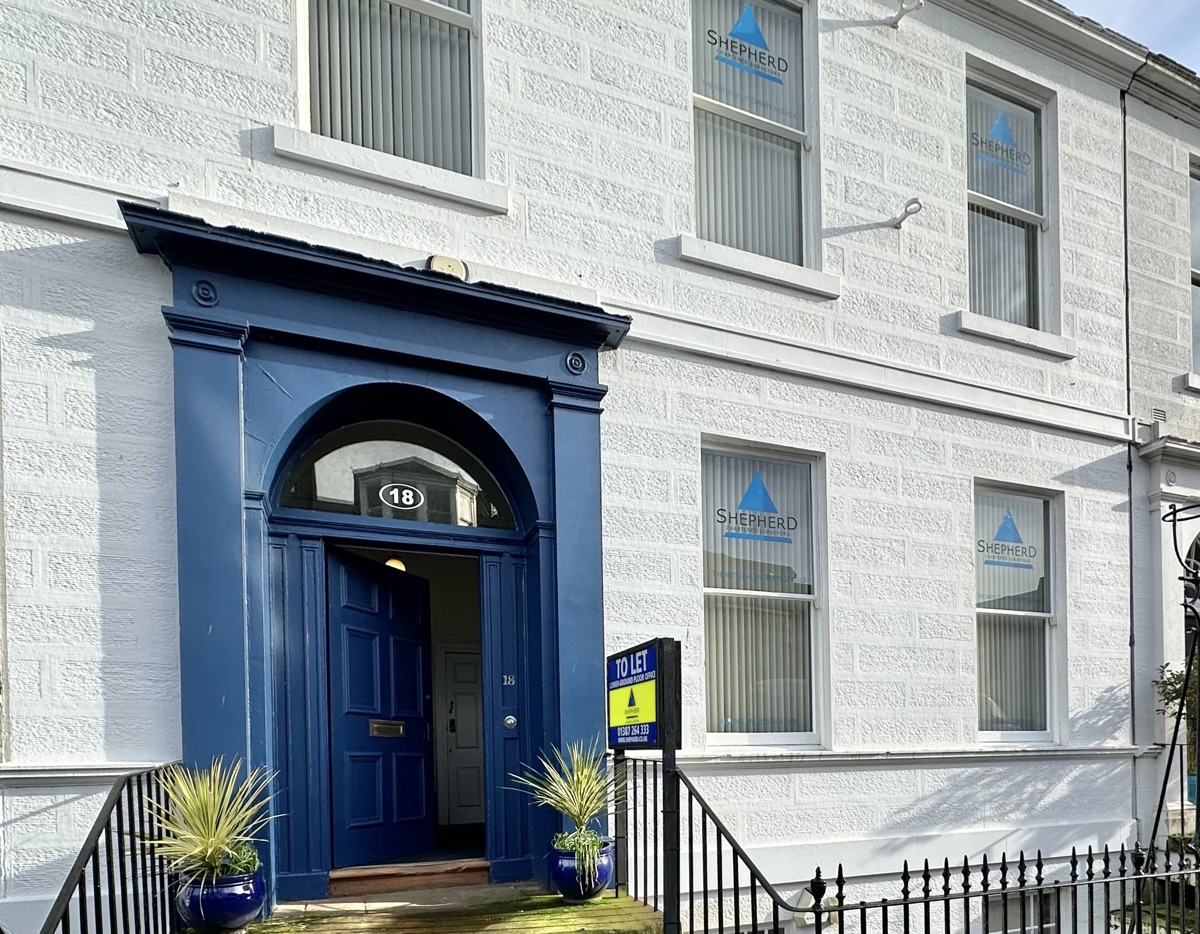
Shepherd Chartered Surveyors — Dumfries
18 Castle Street, Dumfries DG1 1DR
Opening Hours
Monday – Thursday: 8.45am to 5.30pm
Friday: 8.45am to 5pm
Why local knowledge matters
Castle Douglas is an 18th-century market town in Dumfries and Galloway of roughly 4100 residents. Castle Douglas is historically part of Dumfriesshire and is roughly 18 miles southwest from the centre of Dumfries and roughly 42 miles from the English border.
Castle Douglas is a town with a rich local history. Roman remains have been found in the nearby area, and the nearby Threave Castle was a seat of the powerful Earls of Douglas. Also, Mary Queen of Scots is said to have lodged at the house of Fuffnock nearby after the Battle of Langside. The ‘modern’ Castle Douglas was founded in 1972 by a William Douglas – no relation to the earls – and the early town developed in a gridiron plan similar to that used in Edinburgh’s New Town. With the development of the Castle Douglas and Dumfries Railway in 1859 improving the town’s connections, it became a major market town for the surrounding area.
Today, Castle Douglas is still a popular and bustling place. It is designated a “Food Town” – Scotland’s only Food Town – because of its “culinary prowess” with lots of local producers and produce. Indeed, much of the local economy centres on this and there are more than 50 local businesses that either produce or sell high-quality food and drink. As you’d expect then there are many independent retailers selling a great variety of food and drink or related products for residents and visitors alike to enjoy. The lively town centre is also home to local art galleries and studios selling works from local artists, cafes, pubs and restaurants, chocolatiers and more. There’s also your usual variety of chain supermarkets and grocery stores.
Locals who don’t work in the local food and agricultural-focused industries commute for work in nearby Kirkcudbright, Dalbeattie, Dumfries, and other towns nearby. As such transport links are important. The A75 road runs past the town to the northwest and connections are quick and easy. Bus services are reliable and well developed for people wishing to travel to nearby towns and villages as well as on the A75 to Dumfries. The town has no train station of its own, the closest line offering regional travel is in Dumfries, which can be used to travel to Carlisle, which in turn offers direct travel to Glasgow central station or even directly to London.
In terms of amenities and things to do, Castle Douglas has plenty of goings on. The bustling town centre is a particular draw, but some other things include the local architecture of buildings like the town hall and large octagonal clock tower, both listed buildings. The town has a vibrant Community Centre on Cotton Street with over 600 users and is home to The Fullarton, a theatre that opened in 1996 in the building of the former St Andrew’s Church. It currently hosts plays and conferences as well as providing a local cinema.
Just to the southwest of the town are Threave Gardens, run by the National Trust for Scotland, and where it trains its gardeners. Threave Castle is close by and well worth a visit with its scenic location on an island in the River Dee. There is also Carlingwark Loch, dotted with islands and great for boating and picnicking. There is a caravan park and kids’ playground by the loch too.
The Stewartry Agricultural Show is an event that takes place nearby on the first Thursday in August annually and offers entertainment for all ages. Also worth mentioning is that Castle Douglas has been a stage twice in recent years in the tour of Britain.
With so much going on residents certainly benefit. These, and the draw of being Scotland’s only food town also attracts many visitors who use the town as a base for touring wider south-west Scotland. There is a camping and caravan park by Carlingwark Loch and many hotels catering for this aspect too.
As for local schooling then, Castle Douglas is served by Castle Douglas Primary School and Castle Douglas High School.
What do you get in a Home Report?
Single Survey
A professional inspection that provides a snapshot of the property’s condition at the time of inspection, with clear condition ratings and notes.
Energy Report (includes EPC)
An overview of energy performance and emissions, plus recommended improvements. If you’re producing a Home Report, the EPC is included within it.
Property Questionnaire
Completed by the seller, covering practical information a buyer needs (for example, council tax band, utilities, parking, alterations and factoring arrangements where relevant).
How it works
Request a quote
Via online form
Book the inspection
Arranged at a suitable time for you
Survey completed
By a qualified RICS surveyor
Home Report issued
Ready to share with your prospective buyers
Shepherd tip: What affects the cost?
FAQs
Frequently asked questions about Residential Services
Most homes marketed for sale in Scotland need a Home Report, but there are exceptions (for example, certain private sales not put on the market).
Yes — if you’re producing a Home Report, the EPC is included as part of it.
Not necessarily. Access can often be arranged via your selling agent, keysafe, or other agreed method.
The report may recommend specialist checks for particular issues. If that happens, we’ll explain what it means and what people usually do next.
“”